
Separate the four advertised categories
| Category | Open this screen | Record the actual state | Next check |
|---|---|---|---|
| Champion | Collection champion detail; then the same name in Loot | Collection ownership separately from a champion shard or rental | For a shard, read Upgrade, rental or Disenchant action and required essence.[6] |
| Skin | Collection skin detail; then the same name in Loot | Exact champion, skin and permanent unlock state | For a skin shard, first match ownership of its champion.[6] |
| Chroma | Chroma detail and its related champion/skin | Exact color variation and the parent content | Match both the chroma and its parent skin.[3] |
| Loot | Select the named Loot item | Shard, permanent, unopened container or essence; quantity | Read the selected item’s available action before adding it to the unlocked collection.[6] |
A champion shard has three different uses
Select the named champion shard in Loot and read the action before counting it as an owned champion. Upgrading uses the required essence to add the champion to Collection. Renting a champion lasts seven days and consumes the shard. Disenchanting turns the shard into Blue Essence.[6]
- Match the advertised champion name with the champion detail in Collection.
- If the same name appears in Loot, record the item as a shard or permanent and read its action.[6]
- For a permanent unlock, use the completed Collection state as the final check; keep rental access in a separate field.
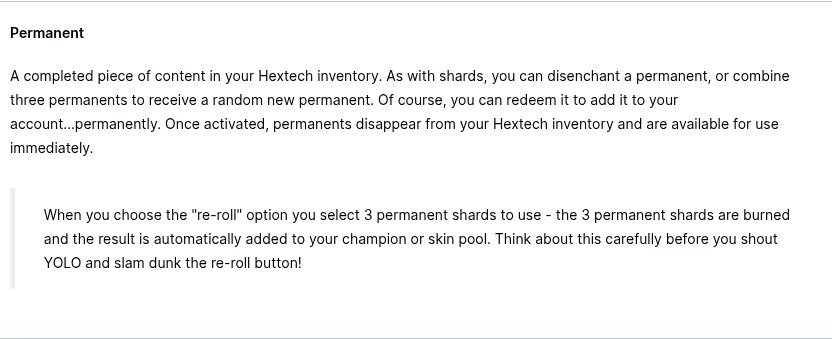
Riot’s glossary shows the Permanent item’s redemption, disenchant and reroll actions.[4]
Check the skin and its champion together
For each advertised skin, record the champion and exact skin name from Collection. A skin shard in Loot is a separate resource. Riot allows skin shards for champions you do not own, but permanent redemption first requires ownership of that champion.[6]
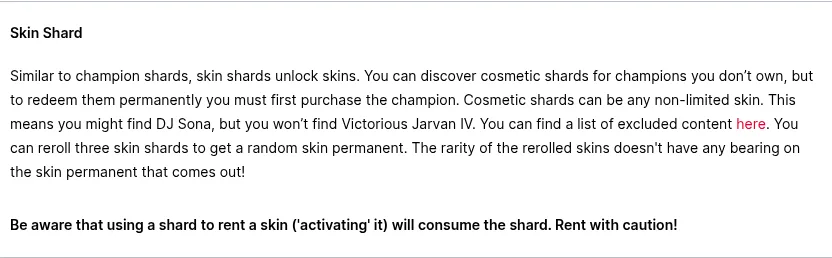
Riot’s Skin Shard definition identifies the parent-champion requirement.[5]
Rerolling three skin shards produces a random skin permanent; the consumed shards’ rarity does not determine the resulting skin’s rarity.[6] If the goal is a particular named skin, check that exact skin’s unlocked Collection entry rather than counting three shards as that skin.
A chroma and the parent skin are separate entries
Chromas are color variations linked to champion or skin content.[3] Open the named chroma, then its parent skin. Record both names and their displayed ownership or use state so a base skin is not substituted for the promised color variation.
Read unopened containers and essence as inventory
An unopened container is a container count. A selected shard is a crafting resource. A permanent can be redeemed, disenchanted or rerolled; after redemption, it leaves Loot and becomes usable content.[6] Keep these inventory forms in separate rows from unlocked champions and skins.
- Named Collection item: champion or skin with the displayed unlocked state.
- Champion shard: name, quantity, required essence and selected Upgrade/rental/Disenchant action.[6]
- Skin shard: exact skin, quantity and ownership of the parent champion before permanent redemption.[6]
- Permanent still in Loot: name and current action; after redemption, verify the Collection entry.[6]
- Unopened container: exact container name and quantity.
Reconcile the listing once, item by item
Use one row per advertised name: category, exact name, current Collection or Loot location, and displayed state. Capture these screens from the same account and region. If a listing names a chroma but the screen shows only its parent skin, ask for the chroma detail before counting that entry.
Keep account region separate from collection contents
If region matters to where or with whom you play, review what a League account region transfer changes before treating transfer as a repair for a mismatched offer.
Riot’s Terms of Service, checked August 31, 2026, prohibit sharing, selling or transferring Riot accounts or credentials and describe virtual-content access as a non-transferable, revocable license.[1] These are account conditions to consider alongside the named collection.
For a collection goal, compare the exact unlocked champions, skins and chromas you need. Keep shards, unopened containers and unredeemed permanents in separate inventory rows, and use their actual actions and requirements to calculate what remains to unlock.[6]
Check League of Legends account purchase options