
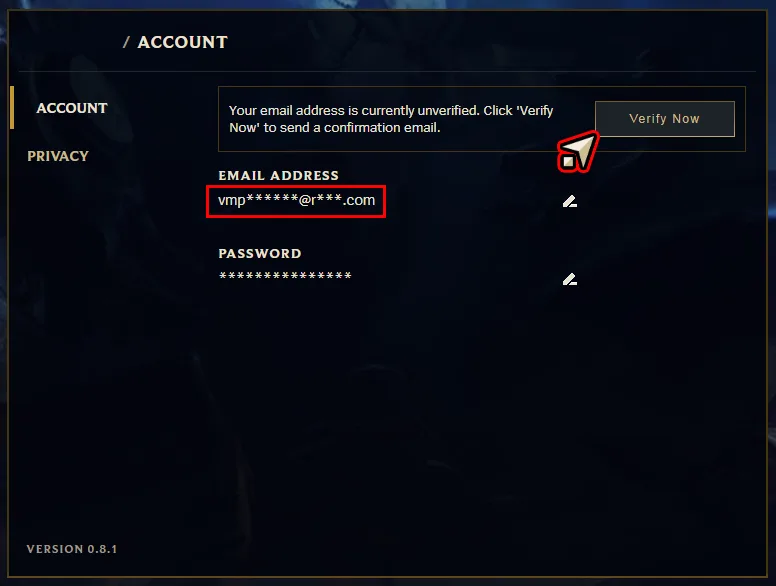
Riot’s Email Verification FAQ shows the Account screen and Verify Now button.[4]
What do you actually control?
There are four separate questions: Can you sign in now? Can you receive messages at the linked email? Can that email authorize credential changes? Could someone else still provide historical information during a future recovery request? A successful login answers only the first.
Riot says the account’s email appears under Account Protection and sends the verification link to that address. Once verified, the email can authorize email and password changes and help recover a forgotten username or password.[1] A screenshot of an address is therefore less useful than opening the account page yourself and receiving the message in an inbox you control.
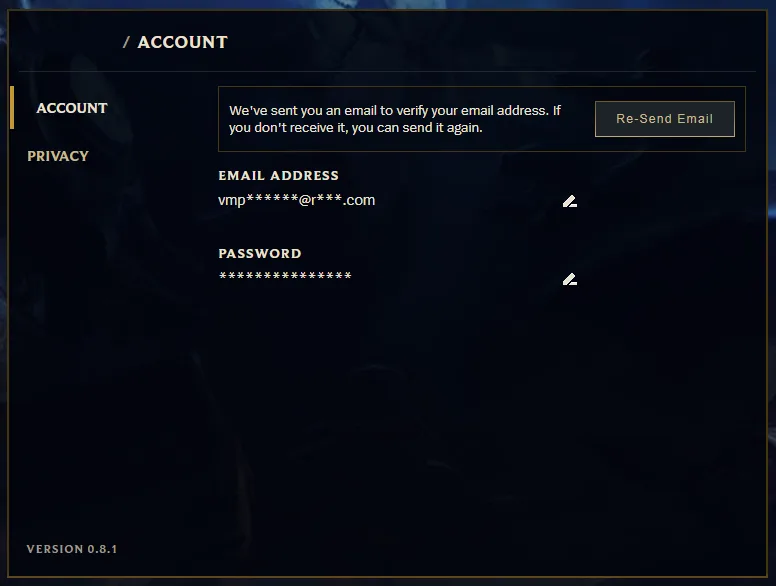
Riot’s Email Verification FAQ shows the verification email sent message and Re-Send Email button.[5]
Which details can you verify?
Call a condition “confirmed” only when you can check it through the relevant account or inbox. A description, message, or screenshot from the other party is still “seller-stated.” If the available evidence cannot answer the question, mark it “unknown.”
| Control condition | Confirmed | Seller-stated | If it remains unknown |
|---|---|---|---|
| Current login | You sign in with the supplied credentials. | The other party says the login works or provides a screenshot. | Current access has not been established. |
| Linked-email access | Account Protection shows the address, and its inbox receives the verification message.[1] | The other party says the email is included or changeable. | You may not control notices, verification, or password recovery. |
| Authority to change credentials | The verified email authorizes the email or password change.[1] | The other party promises the details can be changed later. | The existing email holder may still influence credential changes. |
| Remaining recovery information | No account screen proves that nobody else retains historical details. Riot says support may request the account email, social sign-in, birth date, creation date and location, or a transaction ID.[2] | The other party says no recovery route remains. | A later ownership claim cannot be ruled out from login and email access alone. |
Why doesn’t an email handoff settle ownership?
Player Support may ask for the account’s email, linked social sign-in, date of birth, creation date and location, a transaction ID, or additional information.[2] Transferring the email cannot show that every possible recovery detail has also changed hands or no longer exists.
- Confirmed inbox access proves that you can receive a message sent to the currently linked address.
- A completed authorization proves that the verified email can approve that particular credential change.[1]
- Neither result identifies everyone who may know the account’s original creation or purchase history.
- A claim that the account is “fully secure” remains seller-stated unless each underlying condition can be checked; some remaining recovery access may be impossible to determine.
Keep those results separate. A login may work while the linked email remains inaccessible. You may also control the email while someone else retains historical recovery details. Record the date you checked each condition and classify it as confirmed, seller-stated, or unknown.
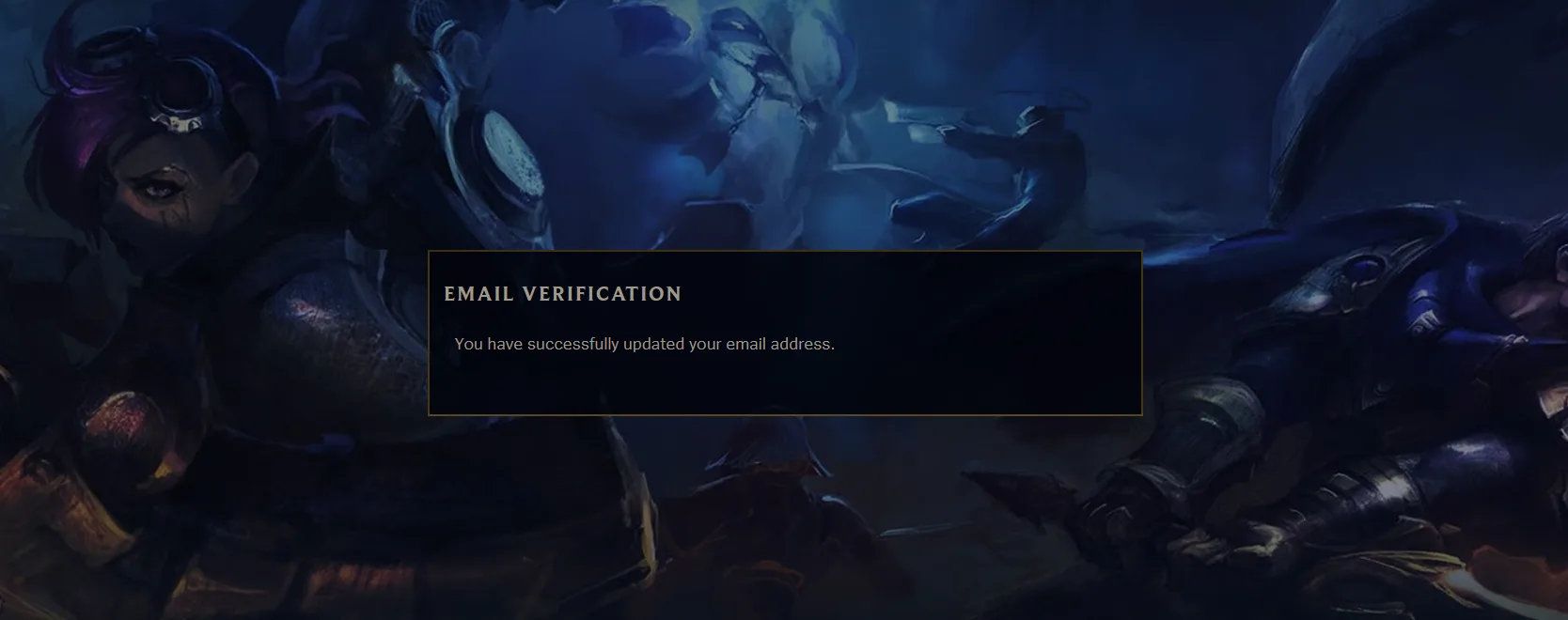
Riot’s Email Verification FAQ shows the email address update confirmation.[6]
Riot’s transfer rule still applies
Riot’s cited Terms say an account or its login credentials cannot be shared, sold, transferred, or made accessible to another person.[3] Controlling the email does not remove that policy conflict or turn a transferred login into durable ownership recognized by Riot.
How should you make the final comparison?
A working login or a promise about email access leaves the central recovery question unresolved. Even after you confirm inbox access and credential changes, historical ownership information may remain elsewhere, and the transfer itself conflicts with Riot’s current Terms.[2] [3] An account created and continuously controlled by you is the safer alternative because its email, creation history, and recovery information begin under the same control.
If you need to compare League of Legends account options, start with the region and account configuration you require. Then distinguish confirmed email control from seller statements and unknown recovery access.