
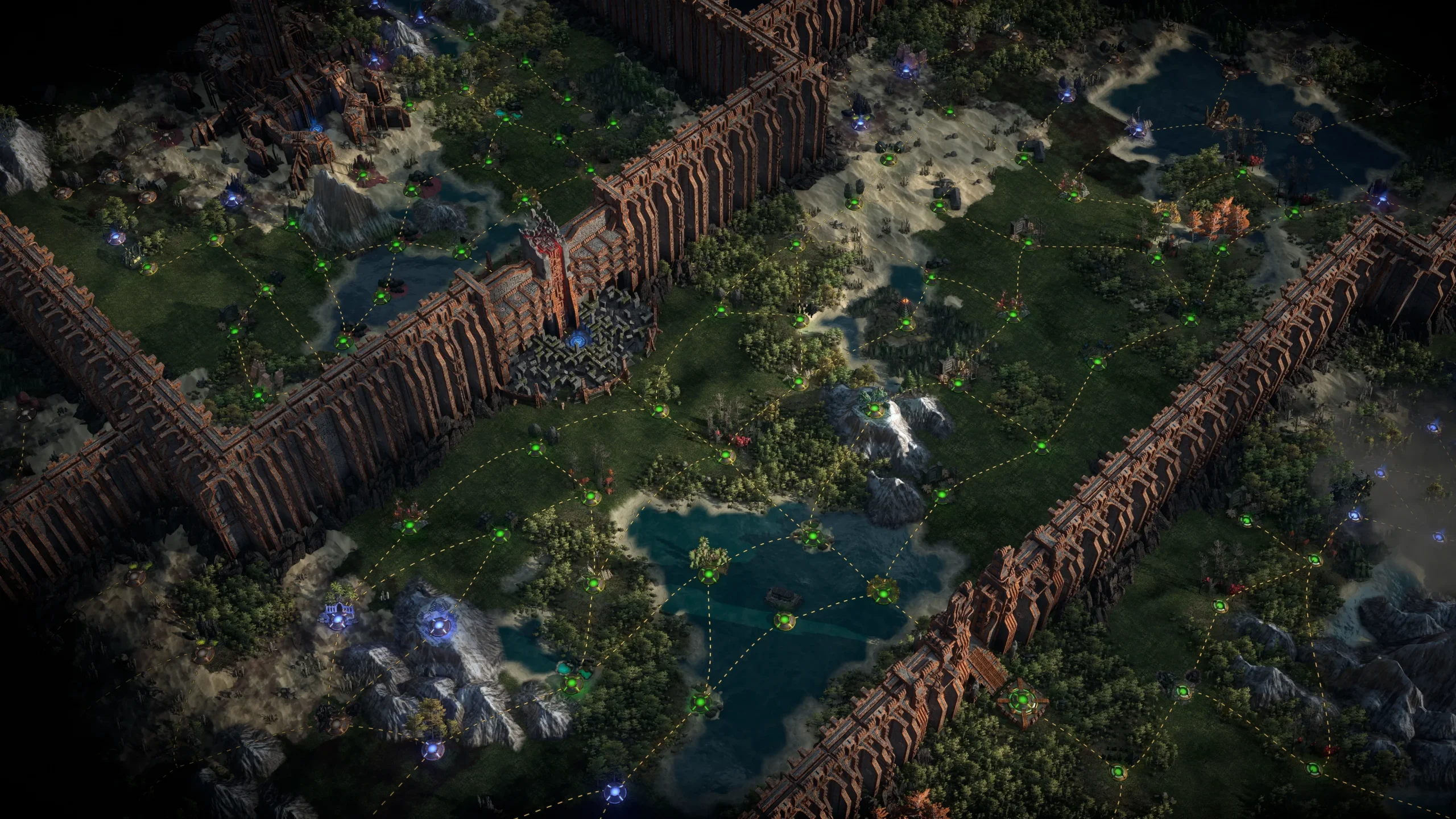
Preparing ten Normal Waystones
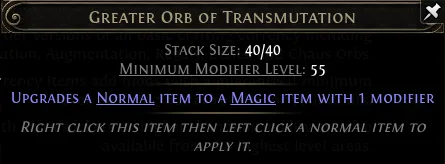
This example uses one Normal-to-Magic preparation route and supposes you are using Greater Orbs of Transmutation already in the plan. GGG’s live item tooltip says a Greater Orb of Transmutation upgrades a Normal item to a Magic item with one modifier.[1] Applying it once to each of ten eligible Normal Waystones uses ten orbs. Setting aside two more for the same preparation route makes the mapping allocation twelve. This is an example, not a requirement to use Greater currency on every Waystone.
If a Waystone is already Magic or Rare, do not budget that Normal-to-Magic step again. The official patch notes describe Waystone modifiers with a downside, a specific upside and additional Waystone drop chance.[2] Read the modifiers on the actual prepared stone; add the costs of further applications only when your chosen preparation route includes them.
Cap three Rare Topaz Ring attempts
For the crafting example, start with three Rare Topaz Rings that each have four modifiers. Topaz Ring is a real item name in GGG’s current PoE2 trade data.[3] Cap each ring at two Perfect Chaos applications followed by one Perfect Exalted application. Three rings therefore require at most six Perfect Chaos Orbs and three Perfect Exalted Orbs.
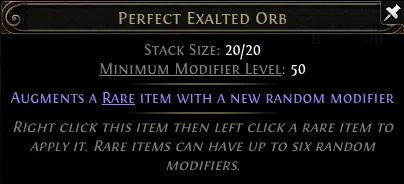
GGG’s Perfect Chaos tooltip removes one random modifier and adds another random modifier on a Rare item. Perfect Exalted adds one random modifier, and the Rare item limit is six.[1] The Chaos applications do not increase the modifier count; one Exalted application on the four-modifier ring takes it to five. The budget pays for these limited attempts, not guaranteed life, resistance or any other desired result.
Keep ordinary, Greater and Perfect currency separate
GGG describes Greater and Perfect versions with minimum modifier levels.[1] The pictured Greater Transmutation has a minimum modifier level of 55; the pictured Perfect Exalted has 50. Fifty ordinary Exalted Orbs are not fifty Perfect Exalted Orbs. Use the full item name and tier as the row name, including when comparing exchange or purchase amounts.
A complete mapping, crafting and trade calculation
All inventory and drop figures below are hypothetical. The separate trade goal is a Rare Iron Greaves listing priced at an illustrative 80 ordinary Exalted Orbs. Iron Greaves and Exalted Orb are real names in the current official trade data, but 80 is neither a live asking price nor a recommended market value.[3] Replace it with the price of the actual item in your league.
| Exact currency | Mapping + reserve | Crafting | Trade | Held | Expected inflow | Shortfall |
|---|---|---|---|---|---|---|
| Greater Orb of Transmutation | 10 + 2 = 12 | 0 | 0 | 8 | 2 | 12 − 8 − 2 = 2 |
| Perfect Chaos Orb | 0 | 3 × 2 = 6 | 0 | 3 | 1 | 6 − 3 − 1 = 2 |
| Perfect Exalted Orb | 0 | 3 × 1 = 3 | 0 | 1 | 0 | 3 − 1 = 2 |
| Exalted Orb (ordinary) | 0 | 0 | 80 | 50 | 10 | 80 − 50 − 10 = 20 |
The mapping column is gross planned spending plus the reserve. Its expected two-orb inflow is subtracted once in the final calculation. Do not first turn ten spent minus two recovered into eight, then subtract those same two orbs again as expected inflow. Using gross costs throughout makes that double subtraction impossible.
Expected drops are not currency you can spend now. If all ten preparation orbs plus the two-orb reserve must be ready before the session, eight held means you need four more at the start. The two-orb shortfall in the table includes two future orbs and describes the overall planning period. Separating the starting requirement from the eventual shortfall prevents a plan that relies on tomorrow’s drops to prepare today’s stone.
When crafting and buying are alternatives
The ring craft and boot purchase in this example are different upgrades, so both are included. If you compare crafting one ring with buying that same finished ring, allocate only the route you choose. Do not reserve both as if they were mandatory. If you exchange one currency for another, update the holdings after the exchange; do not count both the spent original orbs and their converted proceeds.
PoE2 supports cross-play and the same character across supported platforms.[4] Match the league and actual recipient character without imposing PoE1’s platform-separated character rule. GGG’s terms permit personal, non-commercial trading through its game mechanisms or official APIs and allow account restrictions for breaches; that policy also matters when considering external real-money currency trades.[5]
For a currency-option comparison, this plan asks for four precise quantities: 2 Greater Orbs of Transmutation, 2 Perfect Chaos Orbs, 2 Perfect Exalted Orbs and 20 ordinary Exalted Orbs in the same PoE2 league. Compare the full names and quantities against the actual bundle contents, keeping the two Exalted tiers separate.
View Path of Exile currency options